Hams & whole cuts
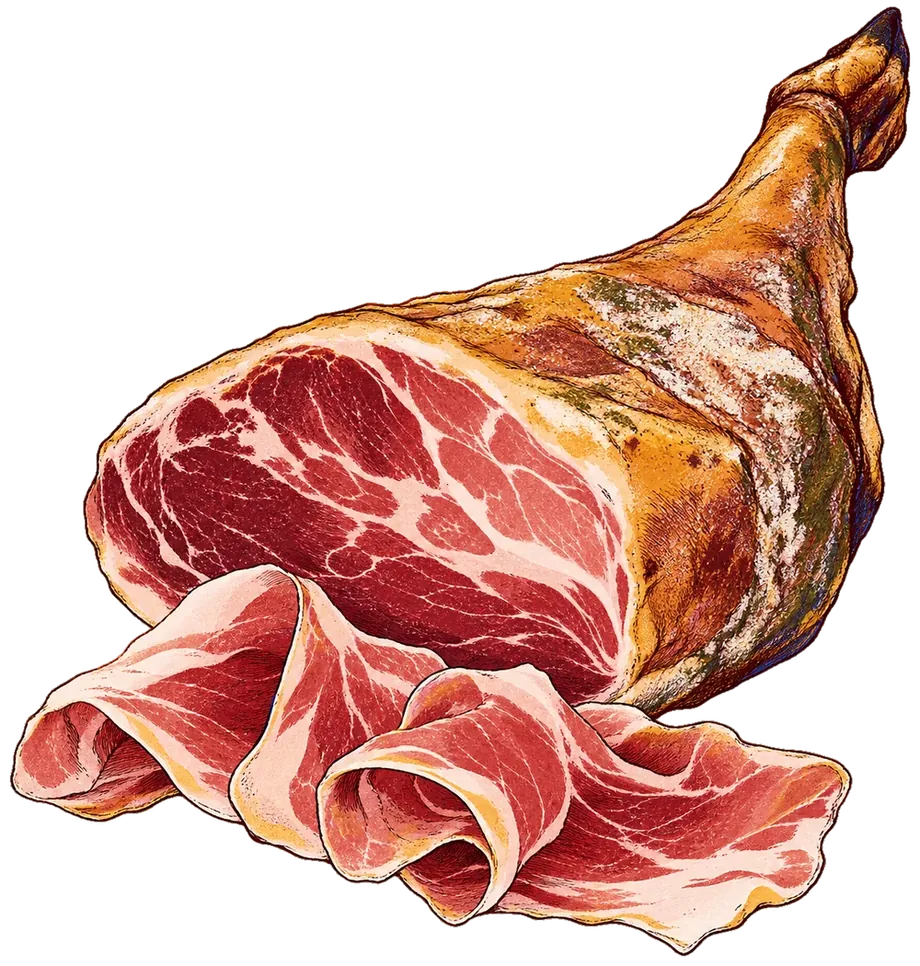
Dry-cured, aged for months, sliced paper-thin.
- Jambon du Kintoa
- Jambon de Bayonne
- Carmarthen ham
1
Les Nobles
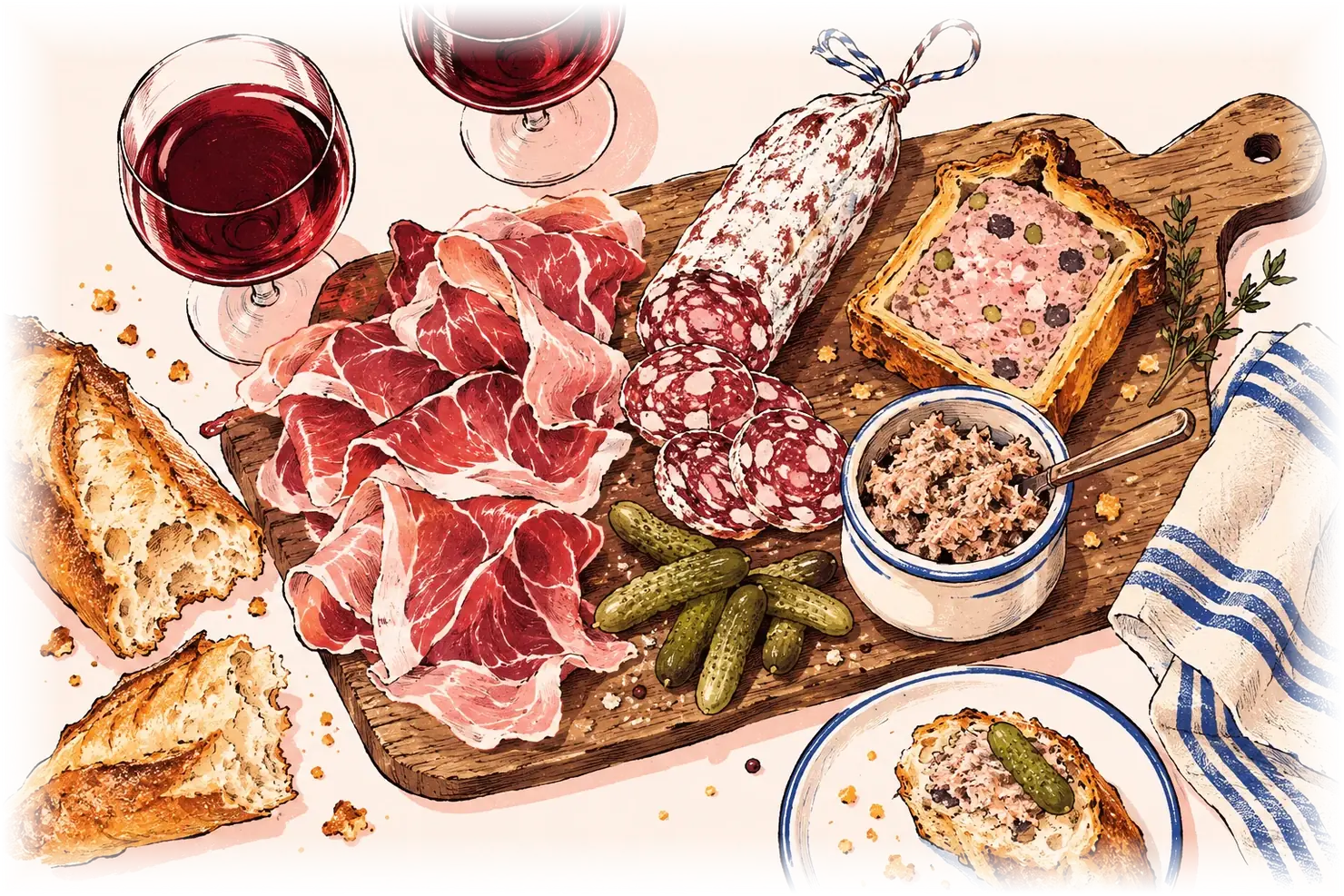
Where it comes from, who makes it, how to slice it, and what to pour when friends turn up at six. For people who would rather have a good board than a long dinner.
One letter every Thursday: a speciality, a board to copy, something to pour. Free.
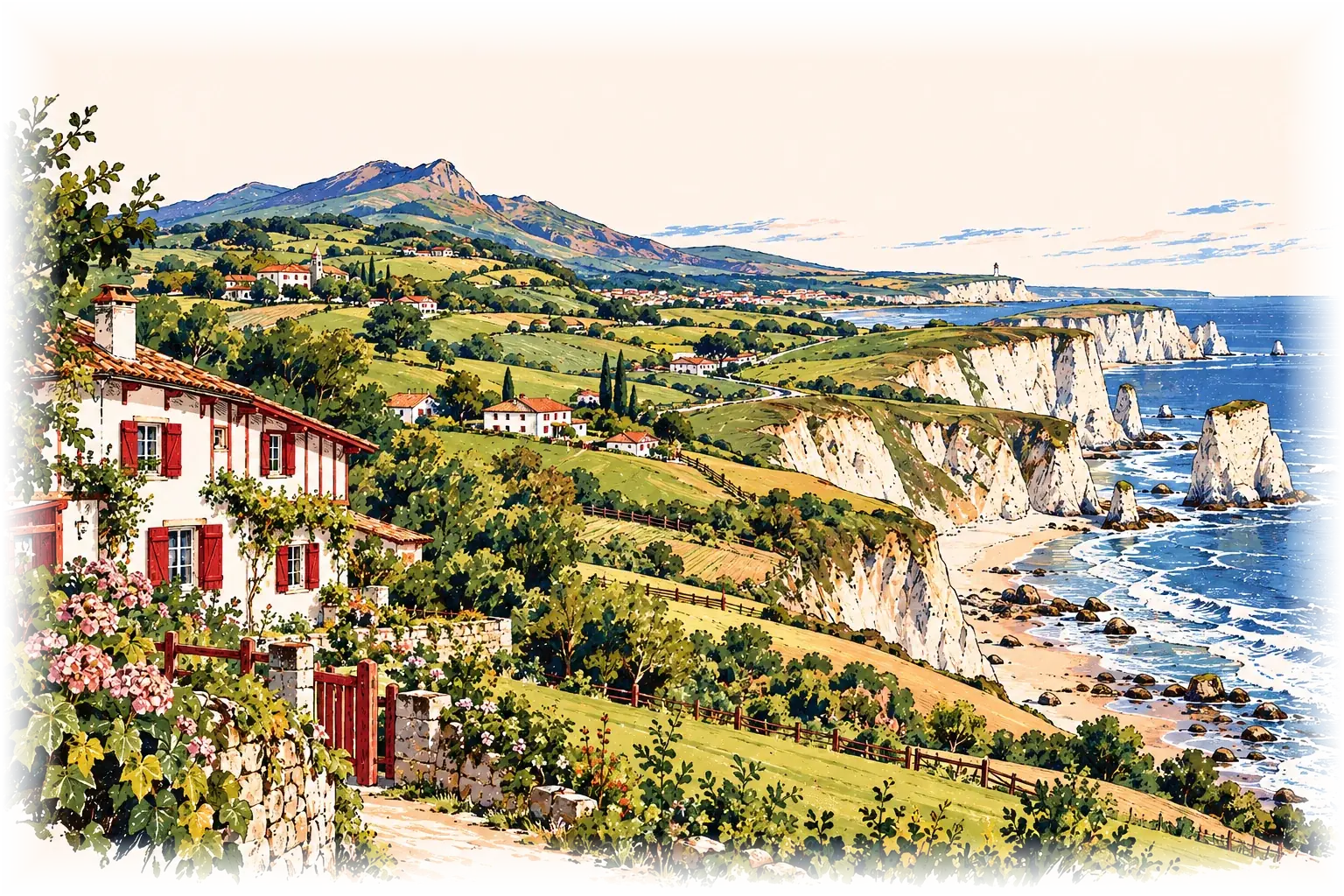
Valleys, breeds and makers, and the labels that protect them.
Explore the regions
What to buy, how much, how thick to slice, what goes next to it.
Build a board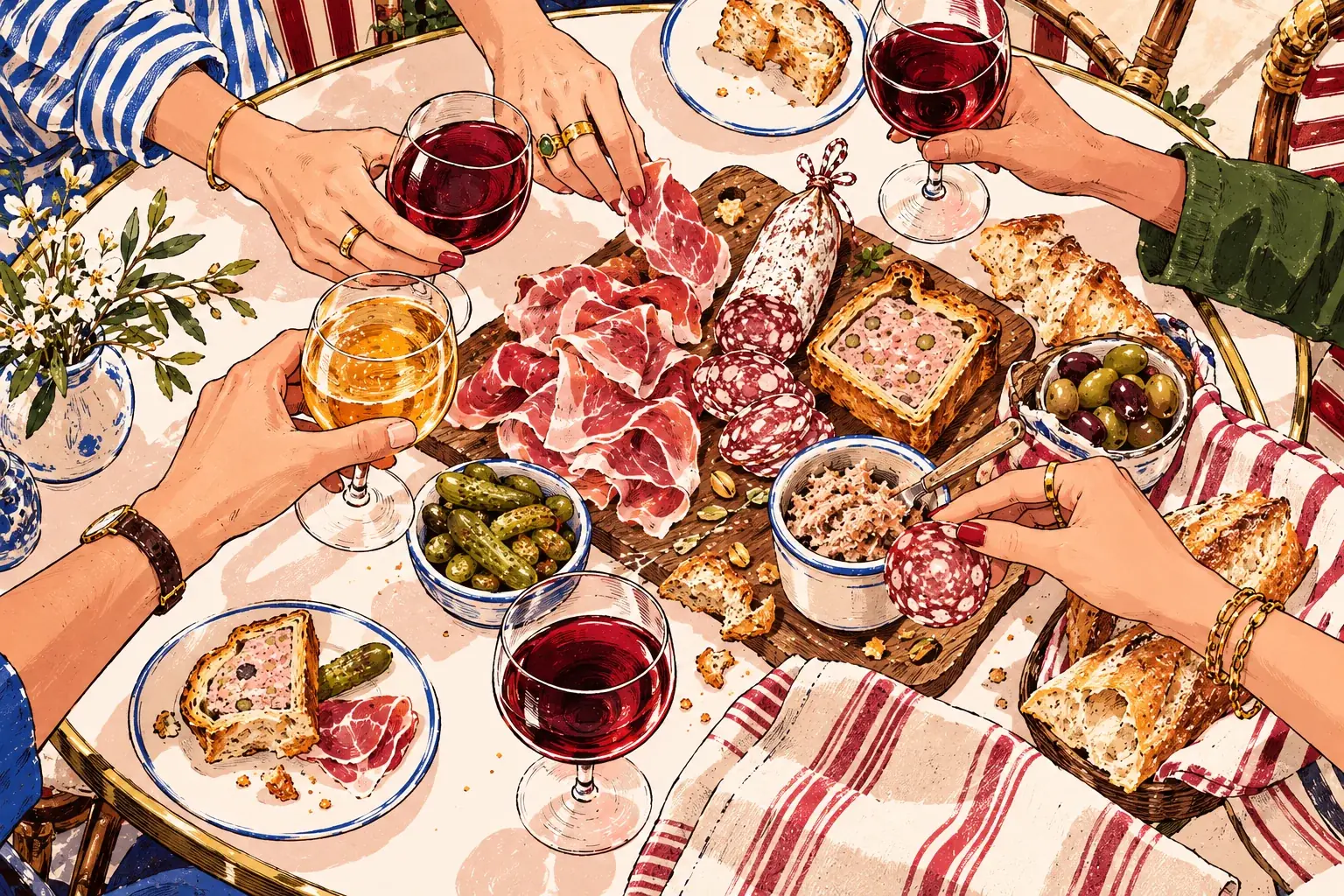
What to pour, what to add, and how to feed six without cooking.
Plan the apéroFrench and British specialities, one at a time: what it is, how it is made, how to serve it. The first is out; a new one every Thursday.
Dry-cured, aged for months, sliced paper-thin.
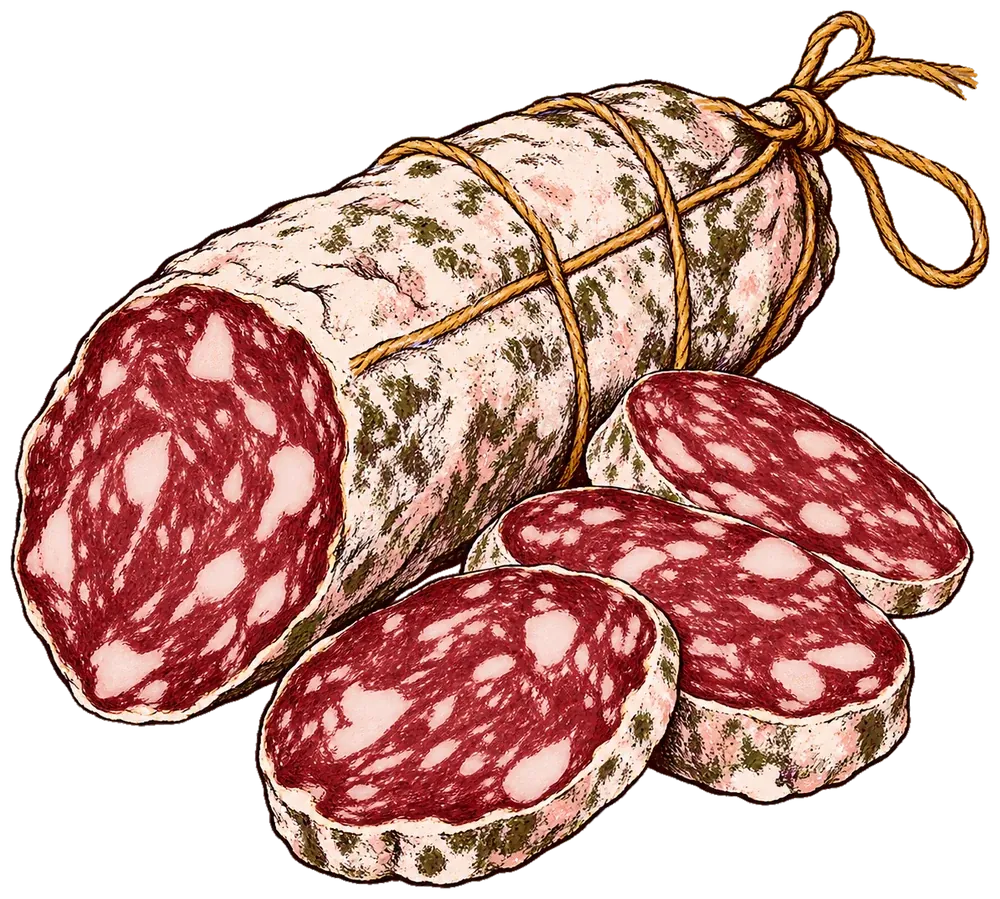
Cut thick, passed round, gone in minutes.
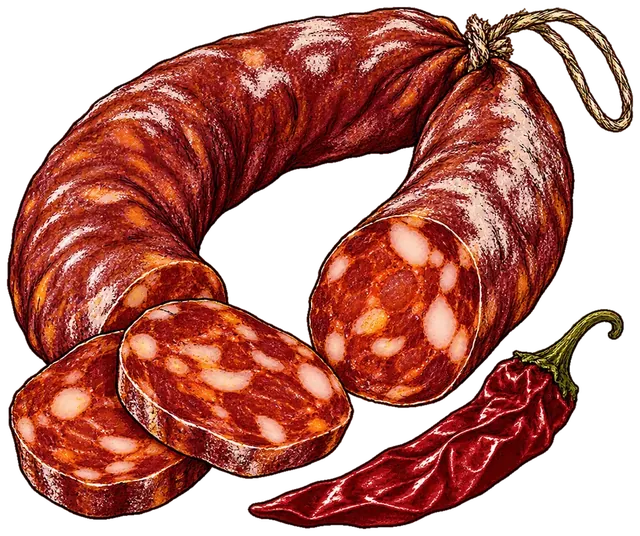
Chilli, smoke, blood. A little goes far.
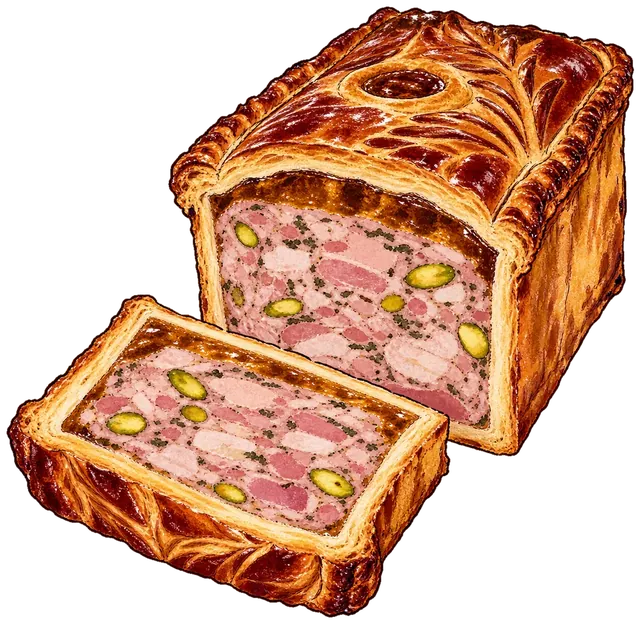
Served by the slice or by the spoonful.
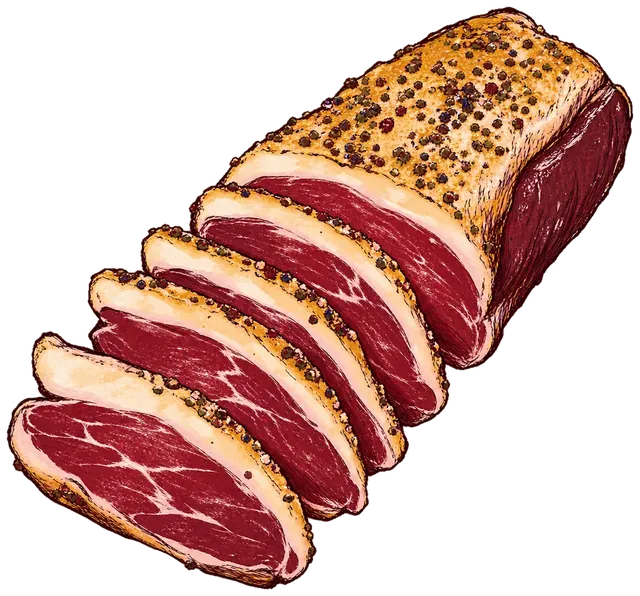
Duck, venison, beef, mutton, goose.
The ham from the pig that nearly disappeared.
A dry-cured ham from the French Basque Country, made only from the Pie Noir du Pays Basque pig. Sixteen months at least, salt from Salies-de-Béarn, and a rub of Espelette pepper before it leaves.
Every speciality we write up is also drawn as a card to keep: 106 over two years. Collect them, print them, or send one to the friend who is wrong about rillettes.
Membership is free. When 5,000 of you are here, the first drop opens: at least 500 boxes, made with the houses we write about, and nothing sold before that.
From Nº 0001 to Nº 5000. Yours for good, printed on the first box.
Founding members see each drop a day before anyone else.
You choose the four charcuteries and the houses that make them.
Priority for the Pig Four Sessions, our tastings in London.
One email a week. The first 5,000 members get a numbered founding card.